

4 min read
Students and educators think outside the box in learning to use technology.
In an era defined by rapid technological advancements, the need to equip younger generations with the skills to navigate an increasingly digital and automated world has never been more urgent.
Until recent years, Hong Kong primary schools lacked computational thinking education, despite research showing children aged nine and above are ready to learn these concepts. And while artificial intelligence (AI) has been growing in importance in education systems worldwide, learning materials for local secondary students have been slower to come by. A digital divide further complicated matters, creating inequitable access to crucial technology education across socio-economic backgrounds.
But with thoughtful guidance and practical programmes, students and educators alike can master essential problem-solving and digital skills while discovering the joy of technological creativity.
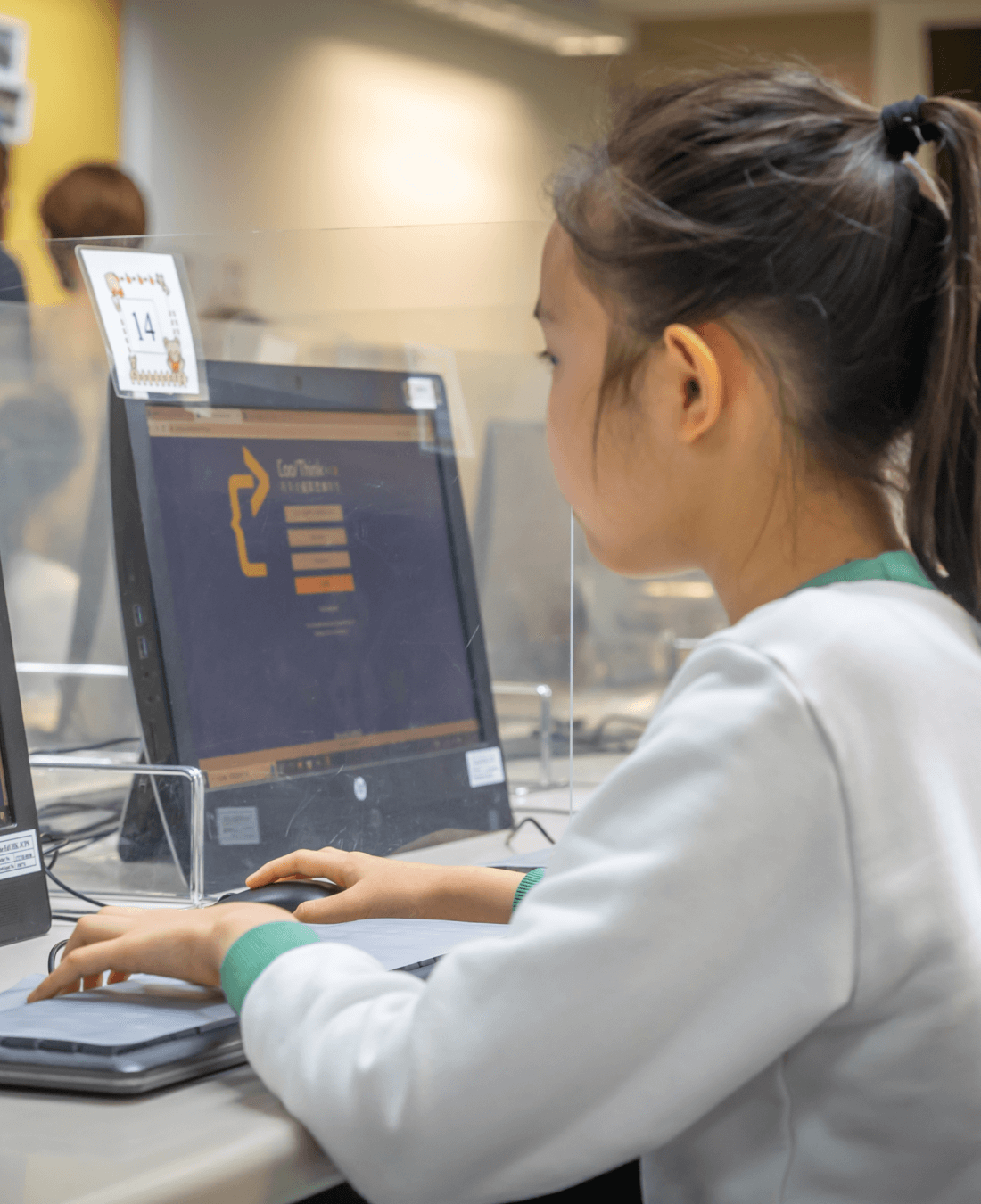
“At school, I noticed the librarian struggling to count visitors,” recalls Yuet Ying, a student at Conservative Baptist Lui Ming Choi Primary School, who is keen to apply the basic programming skills she has acquired.
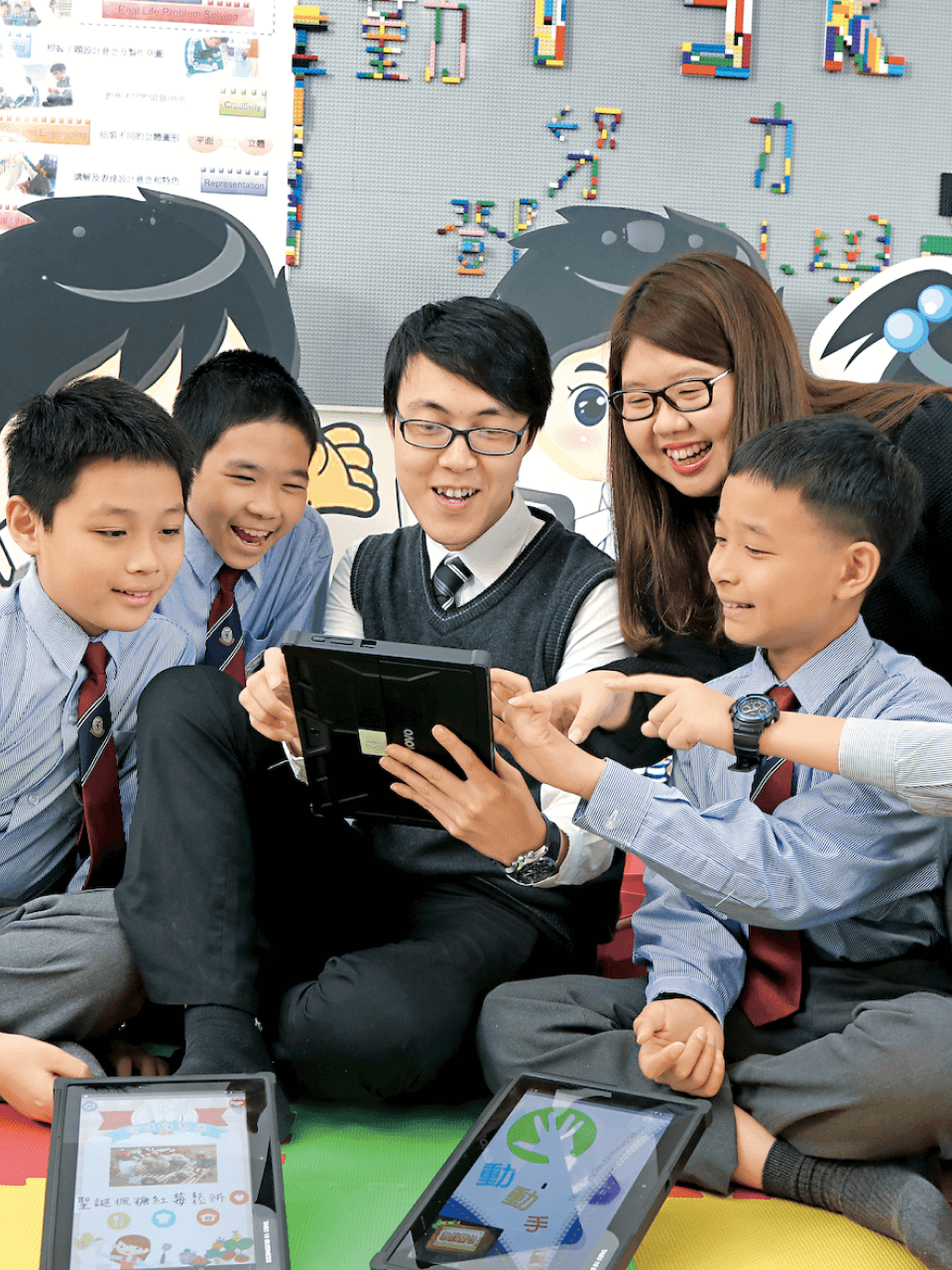
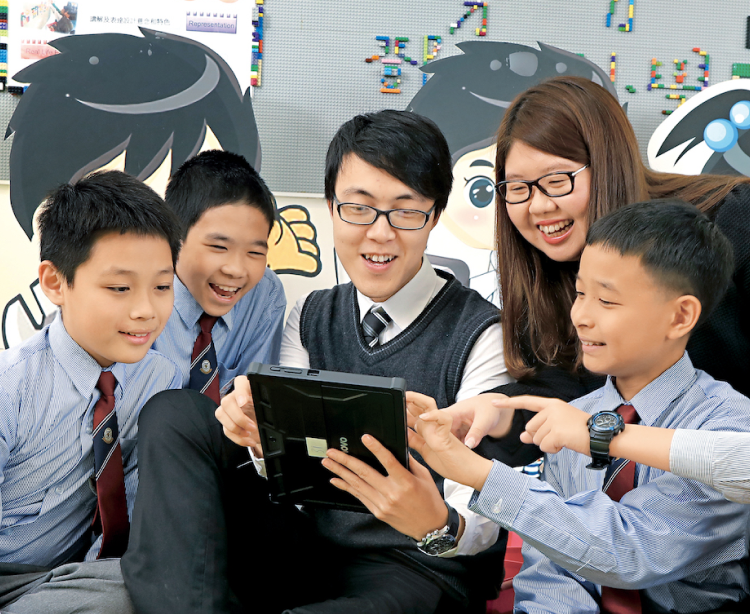
This transformation extends to educators as well. Ms Ho from Po Leung Kuk Dr. Jimmy Wong Chi-Ho (Tin Sum Valley) Primary School still speaks with excitement about the coding classes that he took. “As a visual art teacher who majored in English, I had no previous coding experience. But the classes have helped me understand computational thinking and coding concepts,” he shares. “This experience made me rethink my role—changing from an instructor to a facilitator who solves problems together with students.”
Both Yuet Ying and Ms Ho took part in the CoolThink@JC, which aims to mainstream computational thinking education in Hong Kong’s primary schools, empowering students with critical thinking and problem-solving skills. Launched in 2016, the project promotes fairer access to technology education while fostering digital creativity and providing professional development for teachers.
Until recent years, Hong Kong primary schools lacked computational thinking education, despite research showing children aged nine and above are ready to learn these concepts. And while artificial intelligence (AI) has been growing in importance in education systems worldwide, learning materials for local secondary students have been slower to come by. A digital divide further complicated matters, creating inequitable access to crucial technology education across socio-economic backgrounds.
But with thoughtful guidance and practical programmes, students and educators alike can master essential problem-solving and digital skills while discovering the joy of technological creativity.
“At school, I noticed the librarian struggling to count visitors,” recalls Yuet Ying, a student at Conservative Baptist Lui Ming Choi Primary School, who is keen to apply the basic programming skills she has acquired.
“I developed a small device that could easily count library visitors. As I got to know more about technology, I got more creative, and I applied what I have learned to help others.”
This transformation extends to educators as well. Ms Ho from Po Leung Kuk Dr. Jimmy Wong Chi-Ho (Tin Sum Valley) Primary School still speaks with excitement about the coding classes that he took. “As a visual art teacher who majored in English, I had no previous coding experience. But the classes have helped me understand computational thinking and coding concepts,” he shares. “This experience made me rethink my role—changing from an instructor to a facilitator who solves problems together with students.”
Both Yuet Ying and Ms Ho took part in the CoolThink@JC, which aims to mainstream computational thinking education in Hong Kong’s primary schools, empowering students with critical thinking and problem-solving skills. Launched in 2016, the project promotes fairer access to technology education while fostering digital creativity and providing professional development for teachers.
While computational thinking forms the basis in primary schools, secondary students require more advanced skills to use emerging technologies.
Building on this foundation, CUHK Jockey Club AI for the Future Project was launched in 2019 to help secondary school students understand AI’s social implications while exploring its potential. As AI increasingly shapes our world, students need not only technical knowledge but also ethical frameworks and critical thinking skills to use these powerful tools appropriately.
One student says, “Having learned AI ethics, I understand that AI should be used responsibly. It is not just about creating technology but ensuring it benefits society.” Teachers have also embraced the project, with one educator saying, “Teaching AI has been a learning process for me too. The curriculum provided me with ideas and resources to engage my students. Watching their interest grow has been incredibly rewarding.”
The CoolThink@JC has achieved strong results. CoolThink@JC has expanded from 32 schools in its pilot phase to reach 100% of Hong Kong’s publicly funded primary schools by 2023, benefitting over 100,000 students and training more than 2,000 teachers.
Similarly, CUHK Jockey Club AI for the Future Project has educated over 34,000 students from more than 250 secondary schools and trained over 400 teachers. 90% of participating students increased their knowledge of AI principles and applications, while 85% gained awareness of AI’s impact on society and future workplaces.
The positive reception of these initiatives has prompted broader system change. The Education Bureau has adopted materials from both projects, creating the “Enriched Module on Coding Education for Upper Primary Level” and the “Module on Artificial Intelligence for Junior Secondary Level” for all publicly-funded schools in Hong Kong.
The projects have helped integrate innovation and technology elements into school curricula more systematically. More importantly, they are seeding students’ interest and capabilities in learning information technology and innovative technology at an early age.
By addressing the digital education gap, these complementary initiatives are preparing Hong Kong’s students to thrive in a technology-driven future—transforming them from passive users of technology into confident, ethical innovators.
One student says, “Having learned AI ethics, I understand that AI should be used responsibly. It is not just about creating technology but ensuring it benefits society.” Teachers have also embraced the project, with one educator saying, “Teaching AI has been a learning process for me too. The curriculum provided me with ideas and resources to engage my students. Watching their interest grow has been incredibly rewarding.”
The CoolThink@JC has achieved strong results. CoolThink@JC has expanded from 32 schools in its pilot phase to reach 100% of Hong Kong’s publicly funded primary schools by 2023, benefitting over 100,000 students and training more than 2,000 teachers.
Similarly, CUHK Jockey Club AI for the Future Project has educated over 34,000 students from more than 250 secondary schools and trained over 400 teachers. 90% of participating students increased their knowledge of AI principles and applications, while 85% gained awareness of AI’s impact on society and future workplaces.
The positive reception of these initiatives has prompted broader system change. The Education Bureau has adopted materials from both projects, creating the “Enriched Module on Coding Education for Upper Primary Level” and the “Module on Artificial Intelligence for Junior Secondary Level” for all publicly-funded schools in Hong Kong.
The projects have helped integrate innovation and technology elements into school curricula more systematically. More importantly, they are seeding students’ interest and capabilities in learning information technology and innovative technology at an early age.
By addressing the digital education gap, these complementary initiatives are preparing Hong Kong’s students to thrive in a technology-driven future—transforming them from passive users of technology into confident, ethical innovators.
Did you know?
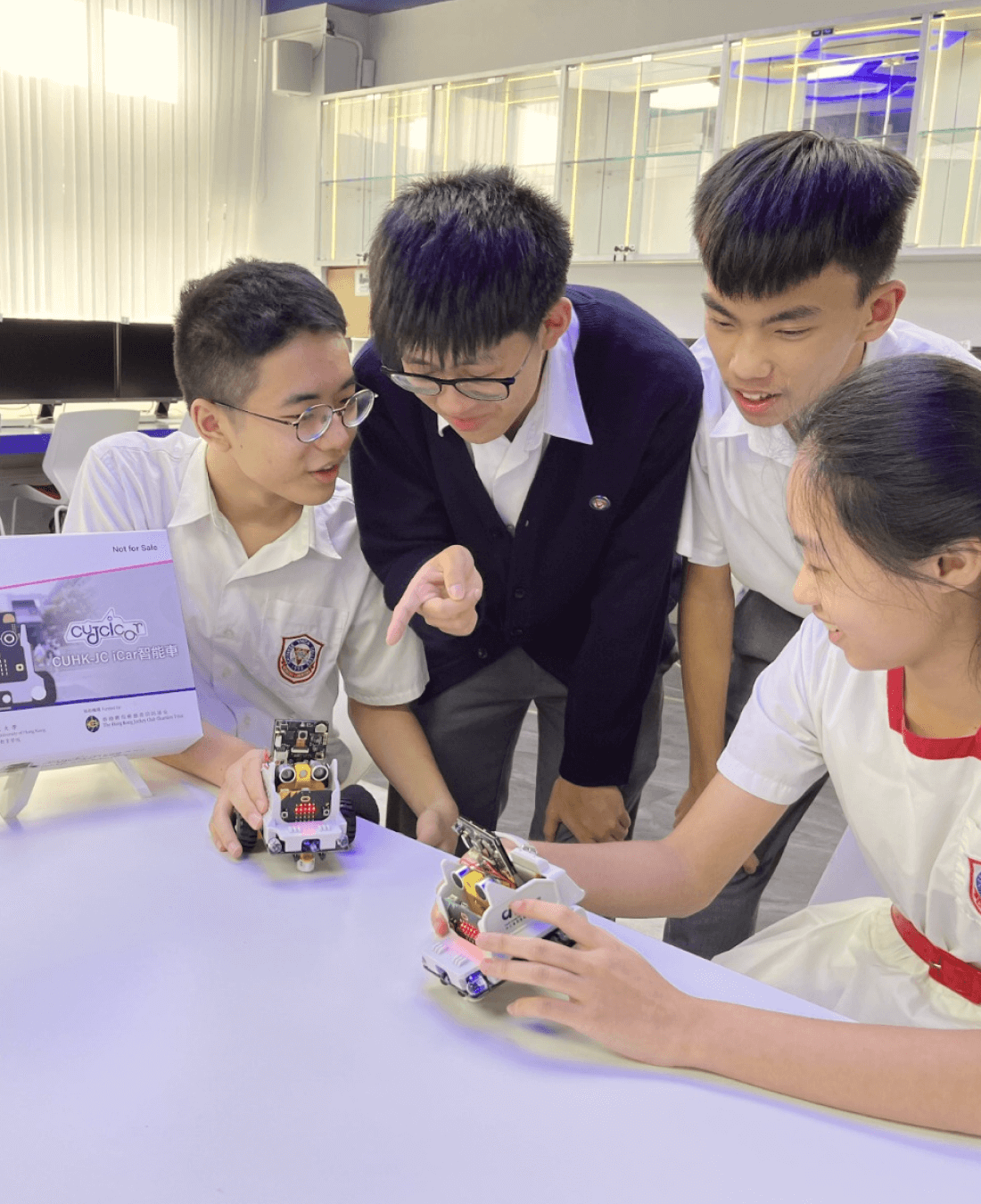
CoolThink@JC has developed comprehensive, research-backed computational thinking education materials that have been disseminated globally to regions including the US, New Zealand, and Dubai. Meanwhile, CUHK Jockey Club AI for the Future Project’s hands-on learning methodology—featuring the proprietary CUHK-JC iCar —received the Hong Kong ICT Gold Award for its effectiveness in teaching complex AI concepts through engaging, practical experiences.


3 min read
Cora Chan says, “Success is doing the best you can within your abilities to contribute to society.”