

5 min read
Principal Andy Li says, “Technology itself is neither good nor bad. The core objective of artificial intelligence (AI) education is to teach students to understand and use AI critically and responsibly, while developing positive digital values.”
Strategic transformation of Hong Kong education amid the AI wave
As generative artificial intelligence (AI) becomes more integrated into our daily lives, Hong Kong educators are facing a pivotal moment. How can technology support learning while nurturing students’ independent and critical thinking?
Supported by The Hong Kong Jockey Club and co‑created by The Chinese University of Hong Kong, the JC GoAI programme was launched in March 2026. It combines AI learning and teaching resources, professional development for teachers and parent workshops. Together, these help students to understand and use AI responsibly.
Supported by The Hong Kong Jockey Club and co‑created by The Chinese University of Hong Kong, the JC GoAI programme was launched in March 2026. It combines AI learning and teaching resources, professional development for teachers and parent workshops. Together, these help students to understand and use AI responsibly.
From relying on AI to developing AI literacy
The Salvation Army Tin Ka Ping School is one of the programme’s participating schools. Primary Six student Ching Sum-ho has discovered both the potential and limitations of AI through practical activities.
"Using AI for learning in class is very interesting because we have more time for practical exercises and interactions with 'Teachable Machine'. I once used it to create a 'rock-paper-scissors' game, training it to recognise the hand gestures for rock, paper, and scissors. After repeated attempts, I realised that AI is not always right. Incorrect image input can lead to incorrect results, so we should not rely on AI entirely. It is crucial to make our own judgements."
The lessons have also changed how Sum-ho uses generative AI tools for homework. "I used to ask AI for an answer. The lessons taught me that AI-generated content is not always correct. Now, I do the work myself first, then use AI for refinement only. I will not accept every suggestion given."
Sum-ho also uses AI as a study aid. Learning new vocabulary, summarising key points in a text and generating revision exercises has never been so efficient. However, he stresses it is important to comply with rules, including protecting others and his own privacy, refraining from generating offensive images, and seeking help from a trusted person instead of AI when experiencing emotional distress.
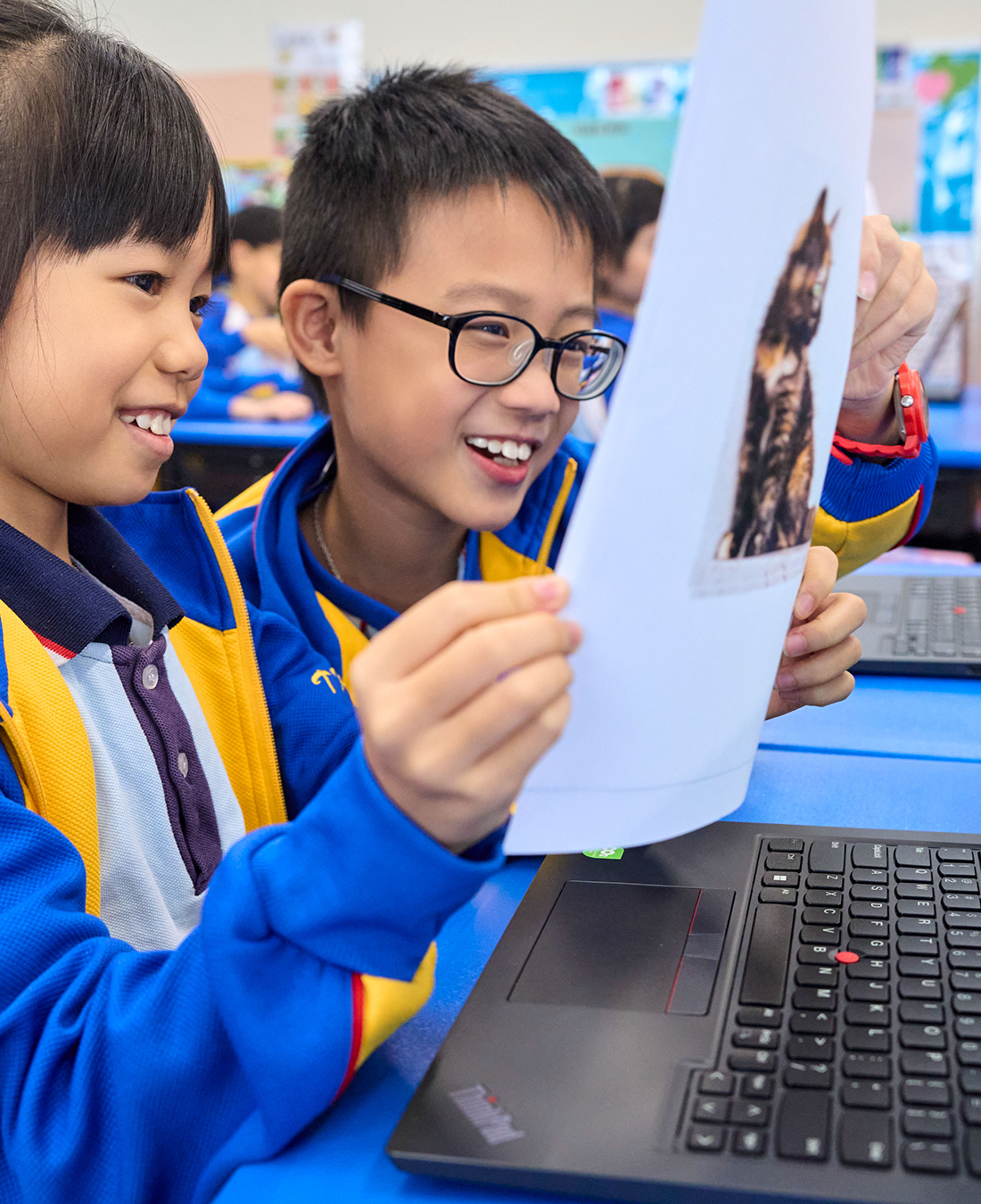
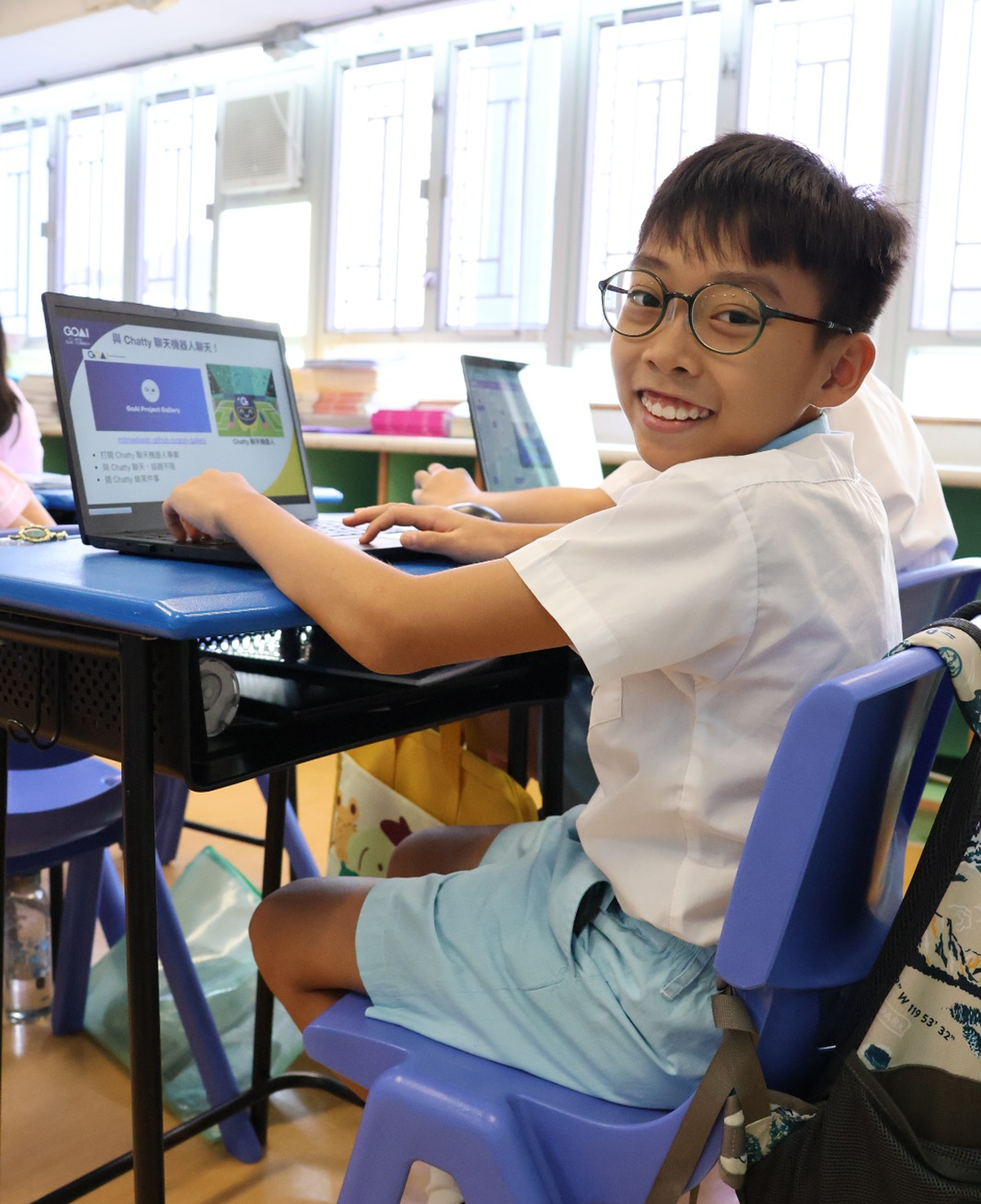
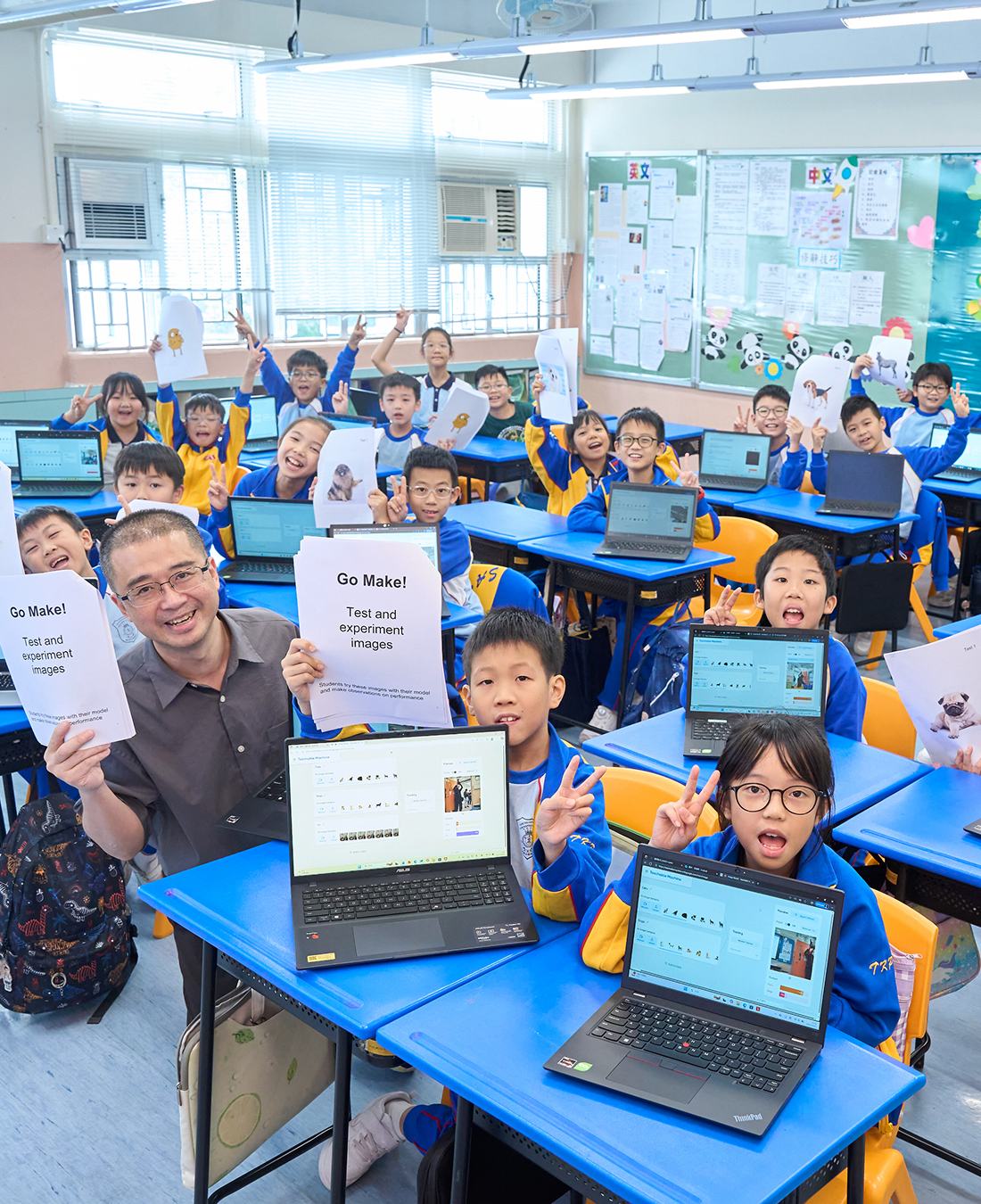
(Bottom) Through interactive classroom activities, Ching Sum-ho is learning how AI works. He now understands that AI is a learning aid instead of an answer to everything.
Hands-on learning develops independent thinking
Principal Andy Li notes that in traditional classrooms, learning and teaching are usually led by teachers, whereas JC GoAI gives students more opportunities to learn by themselves. "Students are obviously more engaged and creative. They also witness data bias through their first-hand experiences, which helps them develop their critical thinking."
Teacher Ng Ka-fai further illustrates the point with an example from a machine learning class. "Many students initially believed that AI can do everything. In one lesson, I deliberately trained the model with misleading data by labelling images of giraffes as cats. When the students asked the AI to identify a giraffe, it classified the animal as a cat. They immediately understood that an AI model is shaped by its training data and is not always correct."
Principal Li adds, "JC GoAI builds AI knowledge on top of computational thinking knowledge gained from the CoolThink@JC programme. Students can create AI models themselves and learn how technology works through practical activities. More importantly, they learn to use AI well while continuing to think and judge independently."
Teachers co-create lessons and exchange ideas
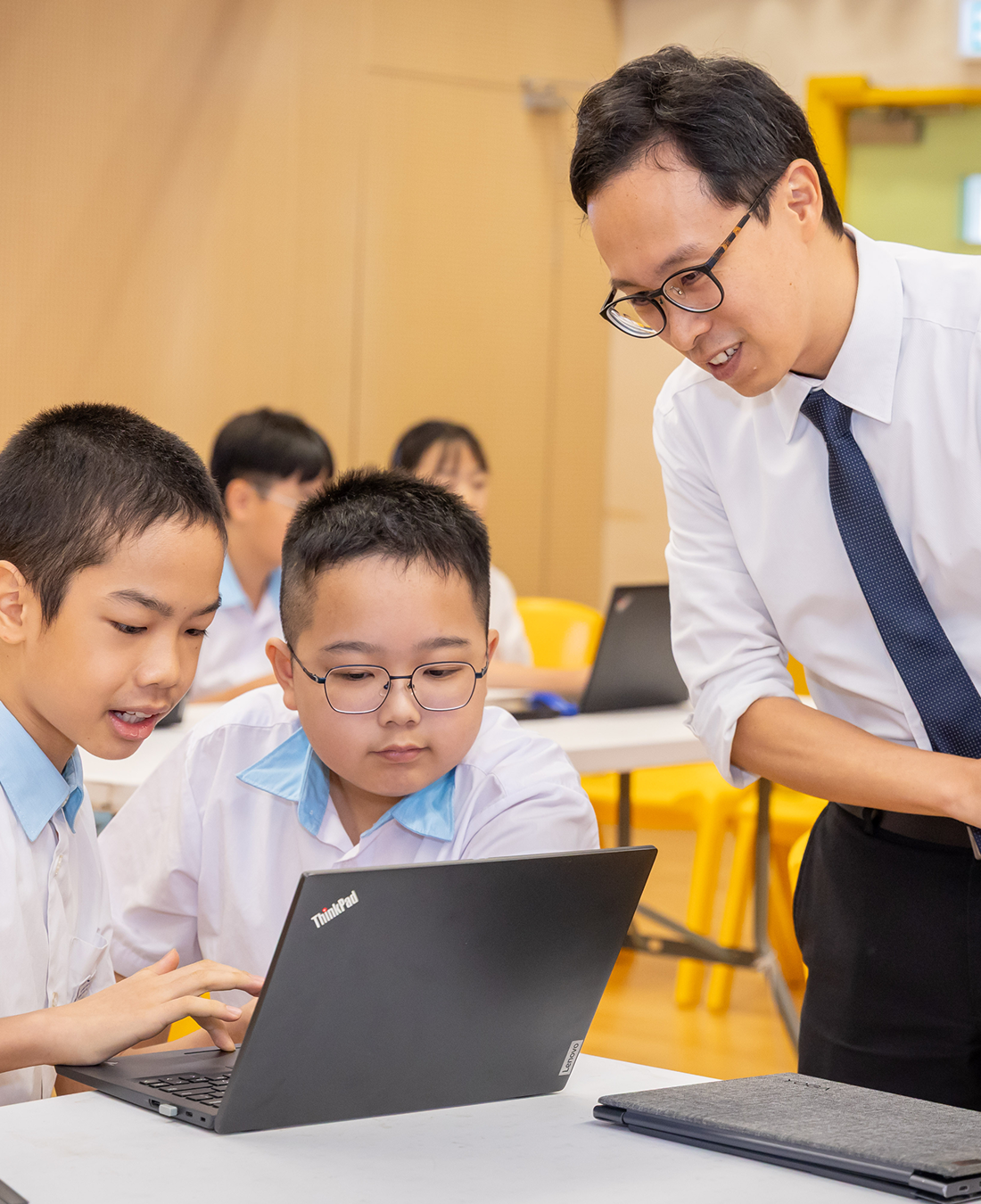
AI has also changed our way of teaching and learning. Principal Li explains, "Most teachers did not grow up in the AI era. It can be difficult for them to adopt new ways of teaching with AI." The programme’s professional development activities help to address this gap. Teachers joined exchange tours to Hangzhou and Toronto, while experts from the Massachusetts Institute of Technology hosted workshops in Hong Kong.
What pleased Principal Li most was that, after observing the demonstration lessons, teachers did more than offering positive feedback. They discussed the lessons openly and made specific suggestions for improvement. “This culture of professional exchange allowed teachers refining the curriculum together and ensuring its content meets the actual classroom's needs,” he said.
What pleased Principal Li most was that, after observing the demonstration lessons, teachers did more than offering positive feedback. They discussed the lessons openly and made specific suggestions for improvement. “This culture of professional exchange allowed teachers refining the curriculum together and ensuring its content meets the actual classroom's needs,” he said.
Shared resources for different school needs
The digital resources available to schools across Hong Kong vary considerably. Schools for under-resourced and non-Chinese-speaking students may face greater challenges in securing the manpower and hardware required to develop an AI curriculum.
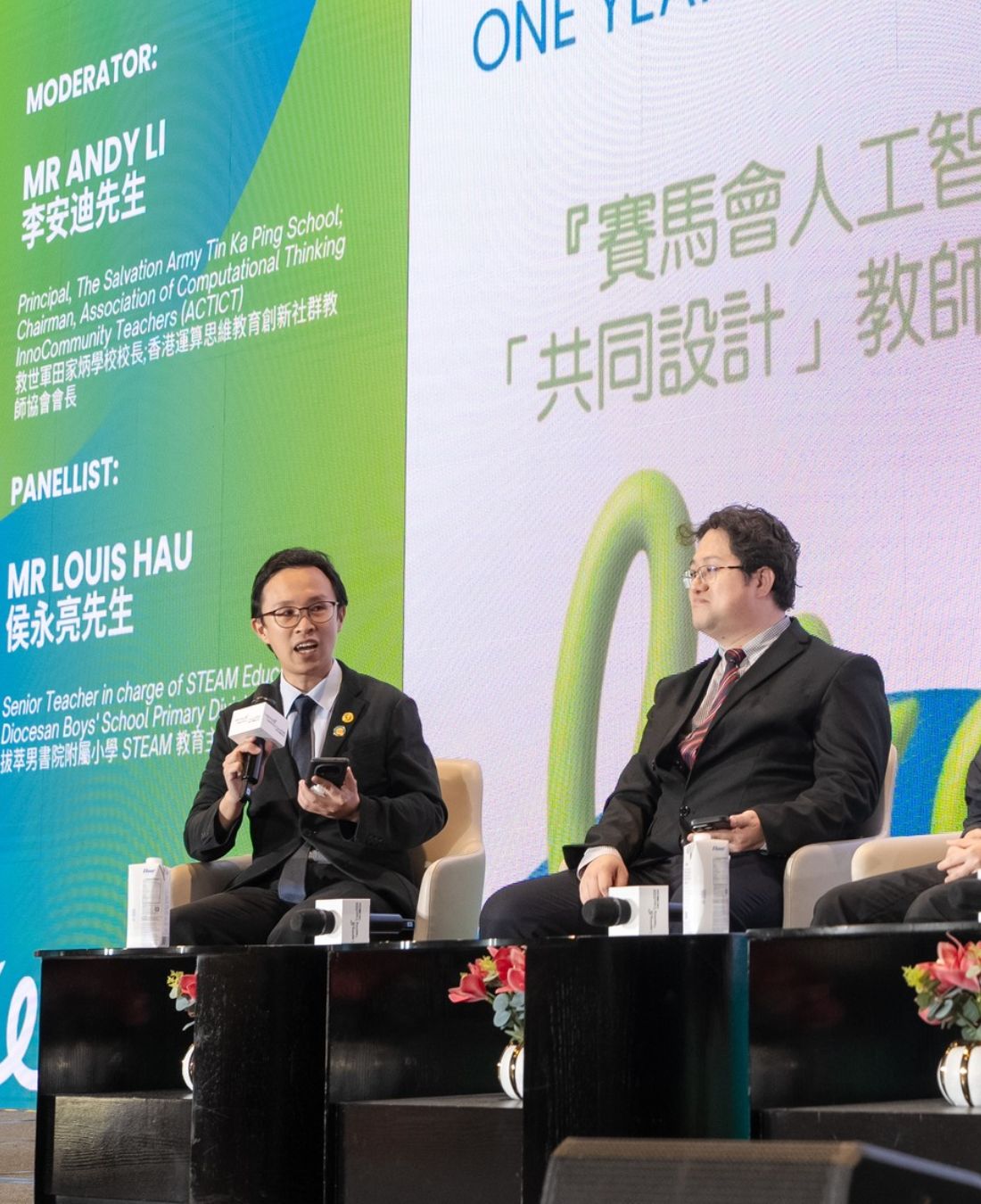
According to Principal Li, the co-design teachers brought together experience from schools with various backgrounds. This ensured that the diverse needs of the students can be met. Inclusion also lies at the heart of the programme, which seeks to ensure that students of all socio-economic backgrounds and learning abilities can participate fully and share its benefits.
The JC GoAI platform includes a shared repository of learning tools and chatbots. These resources support classroom projects, inquiry-based learning, and the creation of revision quizzes, with examples for different subjects.
Guided teaching keeps students thinking
Open-access AI platforms are difficult to regulate, and students can easily use them to complete homework or become dependent on them. The dedicated JC GoAI learning platform addresses these concerns through safeguards built into the design and adopts a guided dialogue approach.
Guided dialogue logic: The system utilises a guided teaching approach rather than offering an answer. For instance, when a student asks about photosynthesis, the platform will respond with a series of questions that guide them to work towards the answer independently.
"AI education must teach students to question and judge independently, and to develop digital ethics around AI, so that they do not become overly reliant on it to do the thinking for them." Principal Li says. The platform records students’ usage, allowing teachers to offer timely guidance. Parent workshops also help families and schools develop a more consistent approach to AI use at home and in the classroom.
Home-school collaboration is essential in the AI education ecosystem
Principal Li believes that parents have different levels of AI understanding, and their expectation of AI education may be different from schools. Schools should maintain a close dialogue with parents on the learning objectives and strategies for a clear alignment.
JC GoAI offers more than a set of teaching materials. It connects schools, teachers, students and parents in a wider support network for AI education. Through parent education, school-based support and AI learning and teaching resources, students learn not only how to utilise AI but also how to think independently and use the technology responsibly.
JC GoAI offers more than a set of teaching materials. It connects schools, teachers, students and parents in a wider support network for AI education. Through parent education, school-based support and AI learning and teaching resources, students learn not only how to utilise AI but also how to think independently and use the technology responsibly.
Did you know?
JC GoAI aims to reach over 100,000 primary four to secondary three students across 300 schools, train 2,200 teachers, and engage more than 11,000 parents.
Co-creation is a core component of the programme. Over 40 local teachers are working closely with education experts to co-design and develop AI learning and teaching resources for multiple subjects, driving teaching innovation to advance high-quality digital education.
Co-creation is a core component of the programme. Over 40 local teachers are working closely with education experts to co-design and develop AI learning and teaching resources for multiple subjects, driving teaching innovation to advance high-quality digital education.
FAQ
JC GoAI is a four-and-a-half-year education project funded by The Hong Kong Jockey Club Charities Trust and co-created by The Chinese University of Hong Kong. Aiming to benefit 300 primary and secondary schools and 100,000 students, it provides cross-disciplinary AI examplars for primary and secondary schools, a dedicated learning platform, teacher professional development training, and parent education to promote AI literacy.


3 min read
Tammy Leung, Elderly Services Director at the Aberdeen Kai-fong Welfare Association, one of the participating organisations in the Jockey Club Digital Support Project for the Elderly, says, "We are talking not just about a mobile phone, but a device that can make the elderly feel cared for and allows them to connect with our community."