5 min read
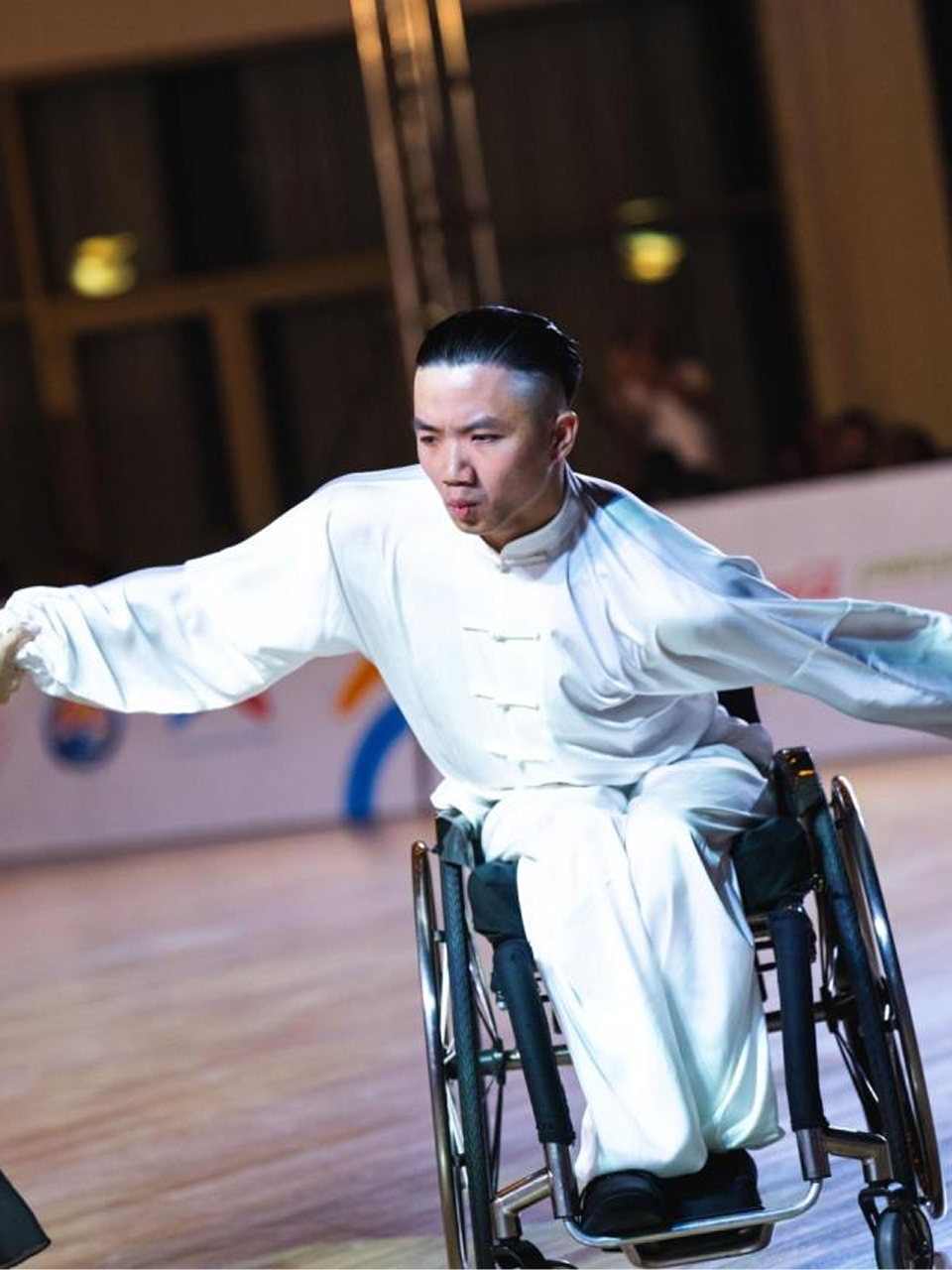
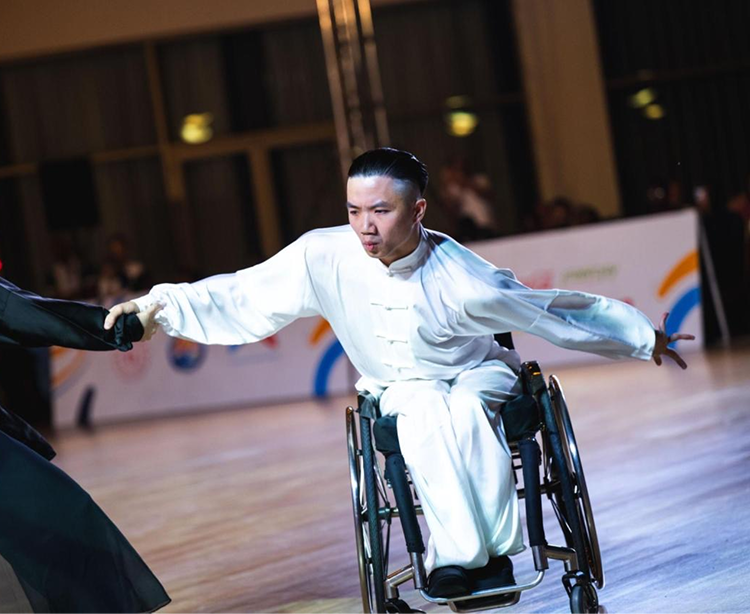
Wheelchair dancer Matthew Yu says, “A wheelchair may limit me physically, but it does not limit my dreams or possibilities. I have never seen it as a barrier.”
A wheelchair has never held Matthew back. Instead, it has been an important companion in his exploration of the world. Born with spina bifida, he has relied on a wheelchair for mobility since childhood. His family never treated him as someone who needed to be protected or restricted. His mother often told him, “A wheelchair is an assistive tool, just like glasses for someone who needs them.” Her words stayed with Matthew and taught him not to define himself by labels or limitations.
With this mindset, he has always been willing to try something new. Over the years, he has taken part in wheelchair fencing, wheelchair marathons and wheelchair basketball. Each challenge has helped him better understand his own abilities while showing others the limitless potential of people with disabilities.
With this mindset, he has always been willing to try something new. Over the years, he has taken part in wheelchair fencing, wheelchair marathons and wheelchair basketball. Each challenge has helped him better understand his own abilities while showing others the limitless potential of people with disabilities.

From competitive sport to artistic expression
In early 2023, Matthew discovered wheelchair dance by chance. A coach soon recognised his potential and invited him to perform. “After that performance, I began to take wheelchair dance seriously. I realised I could set myself a new goal,” he says.
Compared with the sports Matthew had previously pursued, wheelchair dance is not just about physical strength and technique. Rather there is greater emphasis on expressing emotions through movement. His sporting experience gave him a strong fitness foundation, but dance demanded finer control. Every detail, from hand gestures and wheelchair turns to small muscle movements and coordination with the music, required constant practice. This level of precision was unfamiliar at first, but he gradually mastered the techniques. “I began to realise that my body could do more than I had imagined,” he says. This discovery deepened Matthew’s understanding of his own abilities and expanded his view of what the future might hold.
Compared with the sports Matthew had previously pursued, wheelchair dance is not just about physical strength and technique. Rather there is greater emphasis on expressing emotions through movement. His sporting experience gave him a strong fitness foundation, but dance demanded finer control. Every detail, from hand gestures and wheelchair turns to small muscle movements and coordination with the music, required constant practice. This level of precision was unfamiliar at first, but he gradually mastered the techniques. “I began to realise that my body could do more than I had imagined,” he says. This discovery deepened Matthew’s understanding of his own abilities and expanded his view of what the future might hold.
New challenges on the international stage
Matthew represented Hong Kong, China at the 12th National Games for Persons with Disabilities and the 9th National Special Olympic Games (NGD & NSOG) in 2025, winning three gold medals in wheelchair dance. That same year, he finished fifth in the men’s solo event at the World Championships and reached third in the world rankings.
The medals matter, but Matthew values the change in his outlook even more. He once focused primarily on results. Dance has taught him to enjoy performing and creating, and to understand that breakthroughs do not necessarily come from rankings. They also begin with the willingness and decision to accept a new challenge.
The medals matter, but Matthew values the change in his outlook even more. He once focused primarily on results. Dance has taught him to enjoy performing and creating, and to understand that breakthroughs do not necessarily come from rankings. They also begin with the willingness and decision to accept a new challenge.

Experiencing disability inclusion through “Wayfaring Beyond”
No Limits, co-presented by The Hong Kong Jockey Club Charities Trust and the Hong Kong Arts Festival, gave Matthew the opportunity to take part in the dance performance “Wayfaring Beyond”. For the first time, he collaborated with professional dancers from the Hong Kong Dance Company to create a work that culminated in a large-scale outdoor performance at Tai Kwun’s Parade Ground. The cross-disciplinary collaboration offered artists with and without disabilities an equal platform for creative exchange, allowing dancers with different backgrounds to inspire one another through co-creation.
“Without No Limits, wheelchair dancers would rarely have the opportunity to perform in such a large, public setting and show more people what we can do,” Matthew says. His previous performances had mostly taken place in competition venues. “Wayfaring Beyond” brought him into an everyday urban space, where he created alongside dancers without disabilities as an equal partner.
The production differed from competitive wheelchair dance. There were no prescribed routines or scoring system. Instead, the dancers explored the relationship between the body and space through movement and exchange. During the early rehearsals, they needed time to understand one another’s physical capabilities and forms of expression. The professional dancers needed to understand how a wheelchair moves, while Matthew had to adapt to a new creative process.
With each rehearsal, the dancers gradually developed a shared understanding. On stage, the wheelchair was no longer a marker distinguishing dancers with disabilities from those without; it became part of the work. Through eye contact, movement and rhythm, the dancers responded to one another and created together on a basis of equality and mutual respect. Matthew vividly remembers the moment when the music began. His body moved naturally with the rhythm while he remained aware of the surrounding space and the audience’s response. That sense of being both focused and relaxed deepened his understanding of dance and later influenced the way he approached competitions and performances. “It was a very special feeling,” he recalls.

Expanding possibilities through accessible arts
The experience broadened Matthew’s understanding of physical expression and strengthened his confidence to keep exploring. He believes accessible arts involve more than accessible venues and facilities. They should also create equal opportunities for everyone to participate, express themselves in their own way and connect with the wider community.
While Matthew continues to train and compete in wheelchair dance competitions, he also takes part in sharing activities, using his experiences to challenge the view that people with disabilities are simply recipients of support. Their abilities and determination can inspire others, shape perceptions and contribute to a more inclusive society.
For young people, his message is simple. “Try, try and try again. Only by giving something a go will you discover how much you are capable of.”
The limits we face in life often come not from our bodies, but from our imagination. When society recognises each person’s abilities and value, accessibility and disability inclusion can move beyond ideals and become part of everyday life.
Did you know?
Since the launch of No Limits in 2019, the programme has brought together artists of different abilities from Hong Kong and around the world every year to present a diverse range of performances to the public.
Alongside performances, No Limits organises a range of educational and community activities, bringing inclusive arts into schools and communities. These activities help make the arts more accessible, allowing more people to experience the possibilities of arts without barriers and supporting a more inclusive community.
Alongside performances, No Limits organises a range of educational and community activities, bringing inclusive arts into schools and communities. These activities help make the arts more accessible, allowing more people to experience the possibilities of arts without barriers and supporting a more inclusive community.
FAQ
Accessible arts aim to remove barriers to creating, performing and experiencing the arts. This includes providing professional performance opportunities for artists of different abilities, as well as accessibility services such as audio description, accessible captions, sign language interpretation and accessible venue facilities, enabling everyone to participate in and enjoy the arts.


5 min read
“Music and sports allowed students to set aside their grief and start afresh.” Principal Siu Ting remarked. Following the Wang Fuk Court fire, JC Project MuSE tailored music and sports activities for teachers and students, seeing children rebuild a steady rhythm as they embark on a journey of recovery composed of melody and sweat.